
Where to Start With Building: A Designer's Guide to the First Steps
If you're thinking about building a new home or adding a granny flat, the first question is almost never "which builder do I choose?" It's usually something closer to: where do I even begin?
As a residential building designer, this is the conversation I have most often. People come to me overwhelmed - too many display homes, too many conflicting opinions from friends and family, and a nagging sense that they should have "a plan" before they talk to anyone. Here's how I'd map it out if I were starting from scratch.

1. Get clear on your site before you get clear on your house
Before a single wall goes on paper, the site tells you what's possible. Slope, orientation, easements, overlays, bushfire or flood mapping, neighbouring buildings. It all shapes the design long before aesthetics come into play. Skipping this step is how people fall in love with a floor plan that simply won't fit their block, or that will cost a fortune in earthworks and retaining to make work.
A feasibility check at this stage — even an informal one can save months of wasted planning further down the track.
2. Separate "must-haves" from "nice-to-haves"
Every project has a budget ceiling, whether or not it's been said out loud yet. The homes that stay on budget are usually the ones where the client and designer agree early on what's non-negotiable (bedroom count, single vs double storey, accessibility needs, a home office) versus what's flexible (finishes, exact room sizes, extras that can be factored in for later).
This isn't about limiting your vision - it's about making sure the vision survives contact with a real quote.
3. Engage a designer before you engage a builder
This is the step people get backwards most often. It's common to walk into a builder's display centre first, fall in love with a standard design, and only then start asking whether it will actually suit the block. Flipping that order - engaging a building designer first means the design is shaped around your site and your brief from day one, rather than adapted after the fact.
It also means you end up with something builders can actually price accurately, rather than a display home that needs (often expensive) reworking to fit reality.
4. Get documentation that's actually build-ready
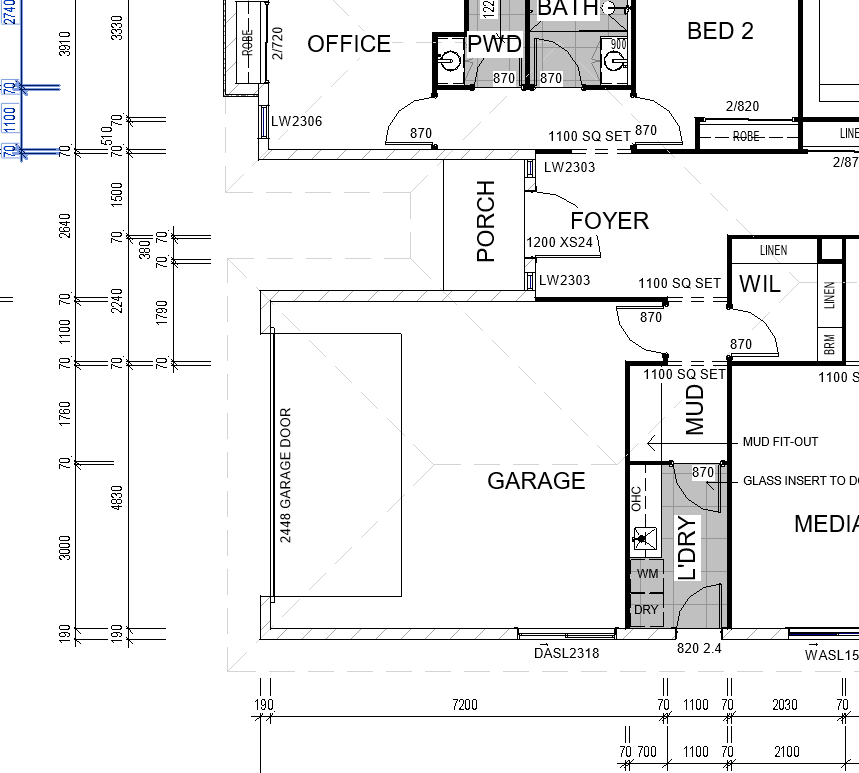
There's a big difference between a set of "concept" drawings and full, build-ready documentation. Concept plans are great for visualising a home and getting a feel for the layout. But when it comes to getting accurate quotes and avoiding a string of costly variations later, you want documentation detailed enough that a builder can price it properly the first time including structural notes, specifications, compliance detail, the lot.
This is where a lot of projects quietly go off the rails: underdone plans lead to underdone quotes, which lead to "surprise" costs once construction starts.
5. Take your plans to more than one builder
Here's something a lot of people don't realise is even an option: if you own your plans, you're free to take them to multiple builders for quoting.
You're not locked into the first builder you spoke to, and you don't need to start the design process again with each new quote. Once your design and documentation are finalised and you hold the ownership of those plans, you can send the same, consistent set of drawings out to two or three builders and compare like-for-like quotes.
This is one of the most valuable and most underused parts of the process. It puts you in control, gives you genuine price comparison (rather than comparing apples to oranges across different plan sets), and means the weeks spent on design work up front are protected no matter who ends up building the home.
A quick note: this is different to a builder's in-house design service, where the plans are typically tied to that builder and aren't yours to shop around. If having the flexibility to compare quotes matters to you, it's worth confirming plan ownership before you start.
Building doesn't have to start with a builder. It starts with understanding your site, your brief, and your budget and with documentation solid enough to get real, comparable quotes. Get those pieces right, and choosing a builder becomes a much simpler, much less stressful decision.
If you're at the very beginning of this process and want a second set of eyes on your site or your brief before you commit to a direction, that's exactly the conversation worth having early.


Comments